philosophy

Type: 
Topical Term
Subfield: 
x
Alias: 
philosophy

Multiple intelligences

the theory in practice
Provides an overview of MI theory and examines its implications for assessment and teaching from preschool to college admissions.
Cover image of Multiple intelligences

The genius of design

Examines the art and science of design, tracing its evolution from workshops to industrial mass production and showing how design influences the world's environment, economy, and culture.

Justice

what's the right thing to do?
Harvard professor Michael Sandel discusses ethical dilemmas and conducts debates in order to challenge his students' moral reasoning, covering topics such as affirmative action, same-sex marriage, murder, lying, and cannibalism.

Why we get sick

the new science of Darwinian medicine
1996
Investigates the causes of illness and disease through application of the Darwinian theory of natural selection, which attempts to explain why humans, in general, are susceptible to some diseases and not to others and why some parts of the body are so prone to failure.
Cover image of Why we get sick

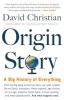
Origin story

a big history of everything
2018
"Takes readers on a . . . ride through the entire 13.8 billion years we've come to know as "history" . . . focusing on defining events (thresholds), major trends, and . . . questions about our origins"--Dust jacket.
Cover image of Origin story

Wooden

a lifetime of observations and reflections on and off the court
The former college basketball coach describes his life and provides personal philosophies for success and achievement.

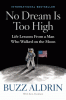
No dream is too high

life lessons from a man who walked on the Moon
Presents personal stories and advice from astronaut Buzz Aldrin, who first walked on the moon in 1966. Includes thirteen life lessons dealing with family, motivation, relationships, and trust.

Why schools fail

1996
Traces the history of government schools and the dominant educational theories over the last 150 years and argues that schools have failed because they presume that all children are essentially interchangeable and can be educated in the same way.

The jazz of physics

the secret link between music and the structure of the universe
2017
"A theoretical physicist and jazz musician combines his two loves to present a new theory of the universe: sound as the link between Einstein's relativity with quantum mechanics"--Amazon.com.

A beautiful question

finding nature's deep design
2015
Does the universe embody beautiful ideas? Artists as well as scientists throughout human history have pondered this "beautiful question." With Nobel laureate Frank Wilczek as your guide, embark on a voyage of related discoveries, from Plato and Pythagoras up to the present. Wilczek's groundbreaking work in quantum physics was inspired by his intuition to look for a deeper order of beauty in nature. In fact, every major advance in his career came from this intuition: to assume that the universe embodies beautiful forms, forms whose hallmarks are symmetry--harmony, balance, proportion--and economy. There are other meanings of "beauty," but this is the deep logic of the universe--and it is no accident that it is also at the heart of what we find aesthetically pleasing and inspiring. As he reveals here, this has been the heart of scientific pursuit from Pythagoras, the ancient Greek who was the first to argue that "all things are number," to Galileo, Newton, Maxwell, Einstein, and into the deep waters of twentieth-century physics. Gorgeously illustrated, A Beautiful Question is a mind-shifting book that braids the age-old quest for beauty and the age-old quest for truth into a thrilling synthesis. Yes: the world is a work of art, and its deepest truths are ones we already feel, as if they were somehow written in our souls.--From publisher description.

Pages

Subscribe to RSS - philosophy