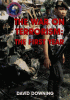
Discusses the "international war on terror" which was begun in the aftermath of the September 11, 2001, attacks, including military, technological, economic, and other weapons being employed.
Examines Homeland Security in the United States after the events of September 11, 2001, and discusses the differences between keeping Americans safe and taking away their civil liberties.
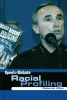
Presents facts on and explores the controversy over racial profiling in the U.S., discussing its history, events that have shaped the issue, and each side of the debate.
Chronicles terrorist activity throughout the world in the late twentieth- and early twenty-first centuries, particularly the 9/11 attacks and response to them, emphasizing the causes and solutions.
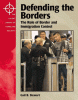
Discusses the creation of the Department of Homeland Security in response to the terrorist attacks on the U.S. in 2001, and examines the work of the newly formed group to control immigration and protect the country's borders.
Presents a selection of the political cartoons created in response to the terrorist attacks on the United States that appeared in the nation's newspapers following the events of September 11, 2001, each with a brief explanation.
Looks at the history of homeland defense in the United States and changes that were made after the terrorist attacks of September 11, 2001, especially the development of the Office of Homeland Security.
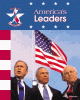
Discusses the leadership of George W. Bush, Dick Cheney, and many other powerful political and military players following the terrorist attacks of September 11, 2001.
A debate-style reader that examines current controversies in world politics, with writings representing the views of political scientists, lawmakers, and political commentators, with an overview of each debate's opposing sides and its impact on world politics.